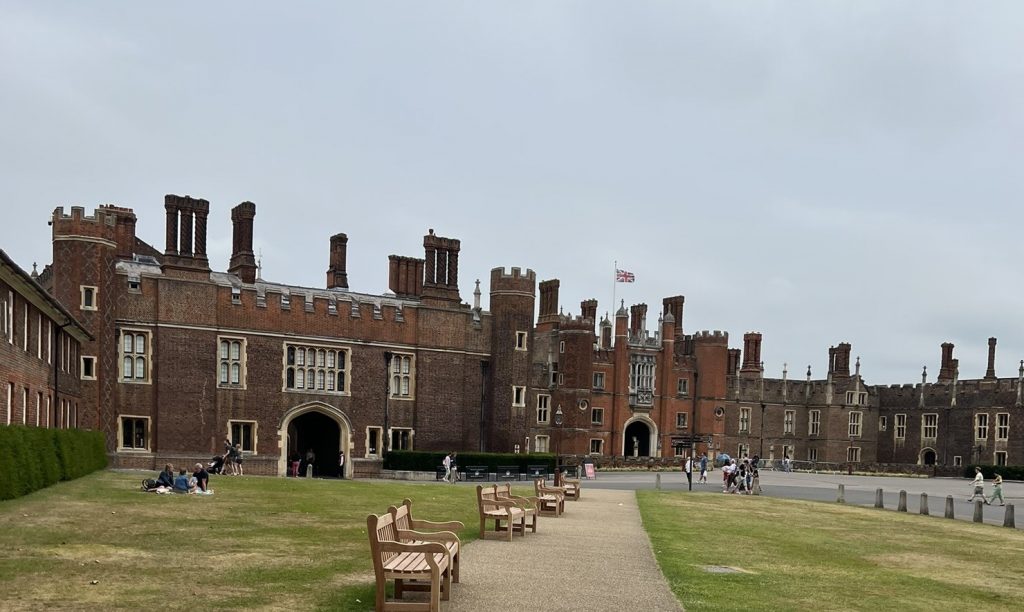
Palace of Henry VIII
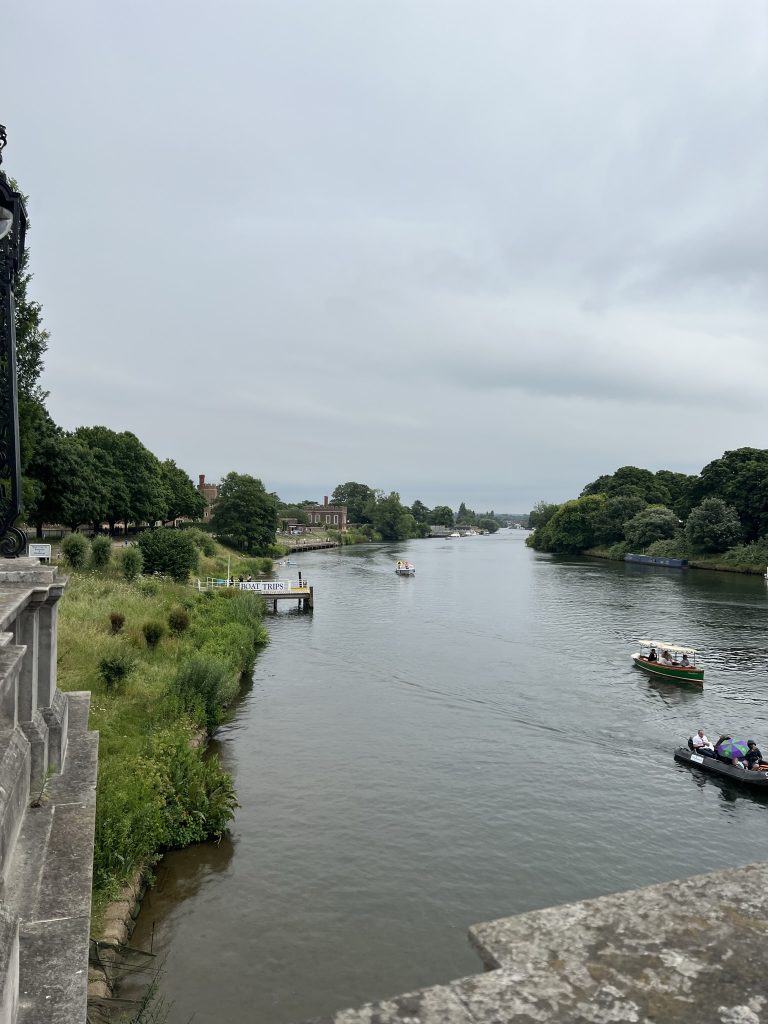
Hampton Court, located 13 miles south of London on the north bank of the River Thames, was originally built in 1544 by Cardinal Thomas Wolsey, Henry VIII’s Lord Chancellor. Cardinal Wolsey transformed it from an ordinary country home to a magnificent palace fit for a king.
As his Lord Chancellor, Henry the VIII wanted the Cardinal to have his first marriage annulled so he could marry Anne Boleyn, but the Cardinal was torn between his King and the Pope. The Cardinal eventually sided with Henry; but that did not prevent the Cardinal’s fall from grace. In trying to stay in good grace with the King, Cardinal Wolsey gave Hampton Court to Henry. However, that didn’t help as the Cardinal was arrested and stripped of many offices. The Cardinal died on his way to the Tower of London which would’ve surely resulted in his execution.
After Wolsey’s death, Henry VIII expanded and rebuilt most of the palace. Henry VIII’s daughters – Queen Mary and Queen Elizabeth I, both resided in the palace. Subsequent kings and queens continued to expand and redecorate the palace. There are two distinct Tudor and Baroque architectural styles evident today.
Upon Queen Elizabeth’s death in 1603, the crown of England went to her cousin, King James the VI of Scotland. His rule united the Scottish and English Countries and he was know as James the VI of Scotland and James I of the House of Stuart.
Another interesting fact about Hampton Court is this is where King James the VI and I held the conference in 1604 to commission the writing of the King James version of the Bible. (For more information Hampton Court – Attendees | King James Bible History (kjbhistory.com)
For more information on Cardinal Wolsey: Hanson, Marilee. “Cardinal Thomas Wolsey Death & Fall From Grace 1530” https://englishhistory.net/tudor/cardinal-thomas-wolsey-death/, February 4, 2015
For more information on Hampton Court: The story of Hampton Court Palace | Hampton Court Palace | Historic Royal Palaces (hrp.org.uk) or Hampton Court Palace – Wikipedia
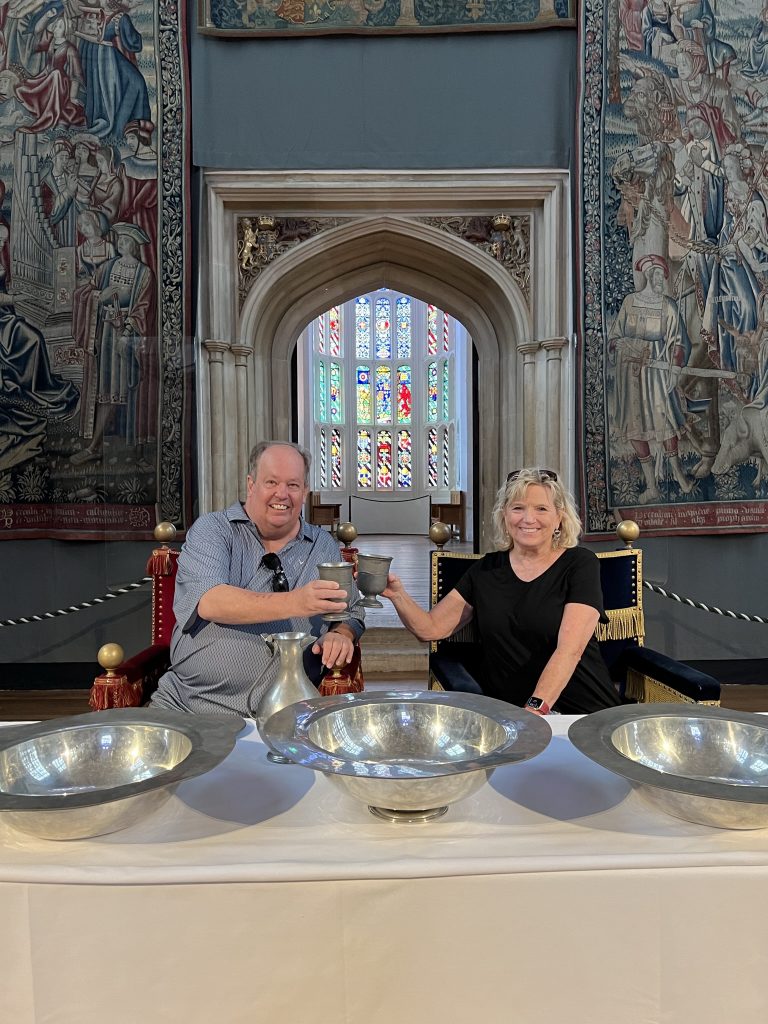
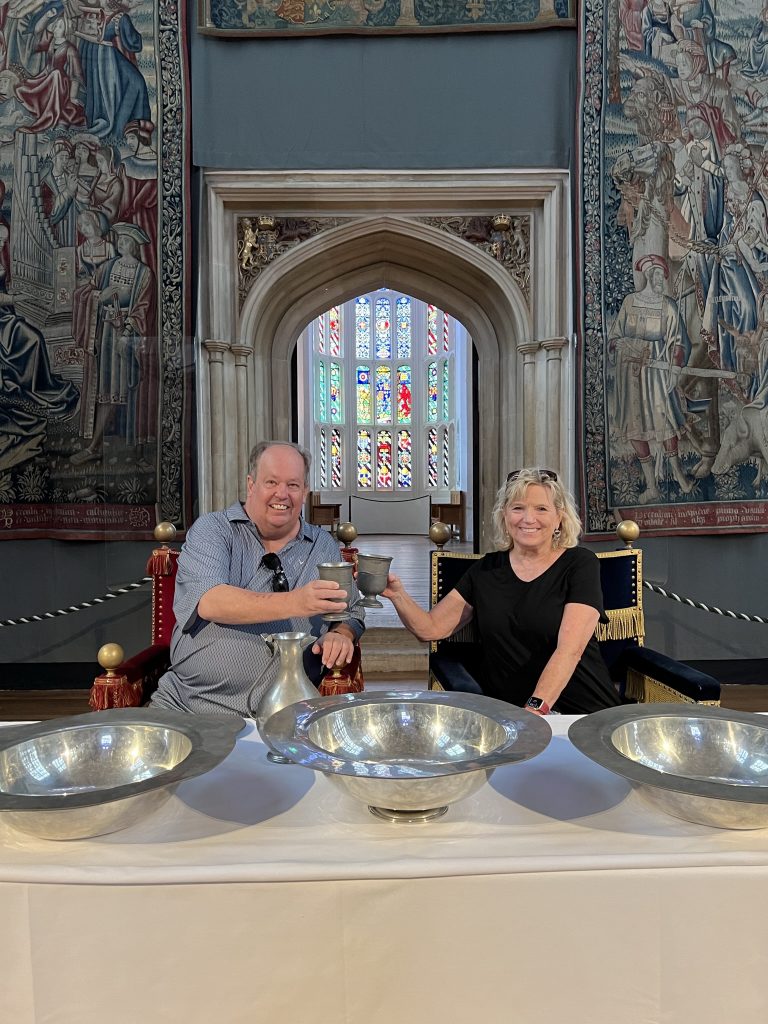
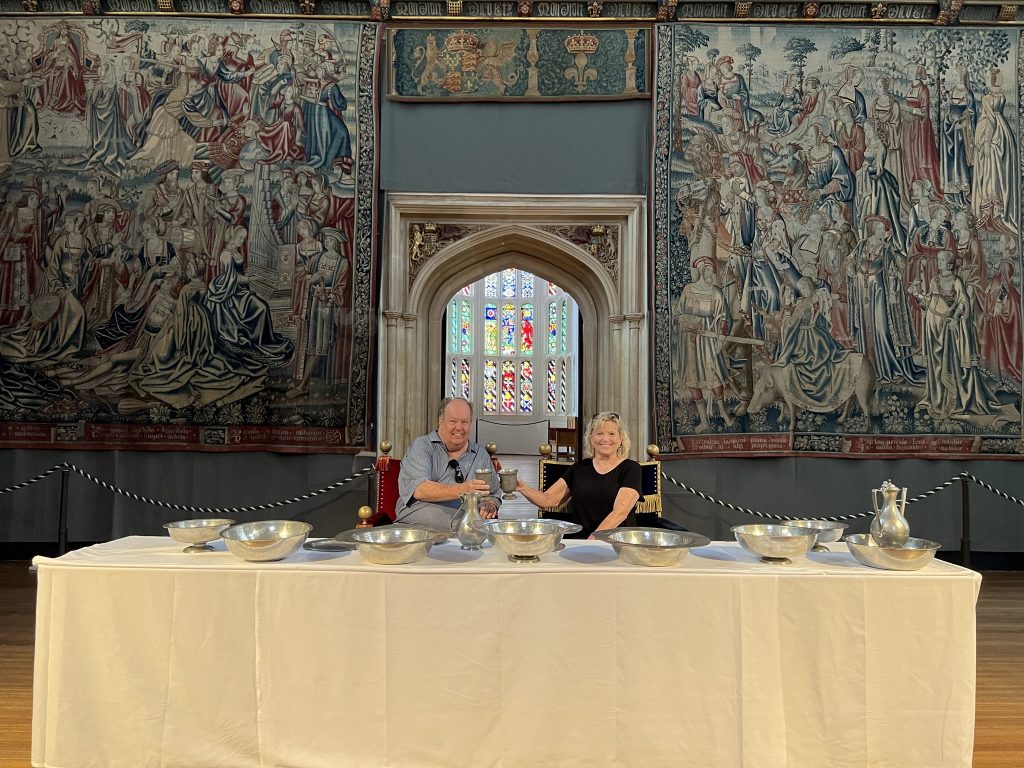
In the great hall Kenny and Kay sit at the King’s table and toast to each other. More on the tapestries behind the thrones later!
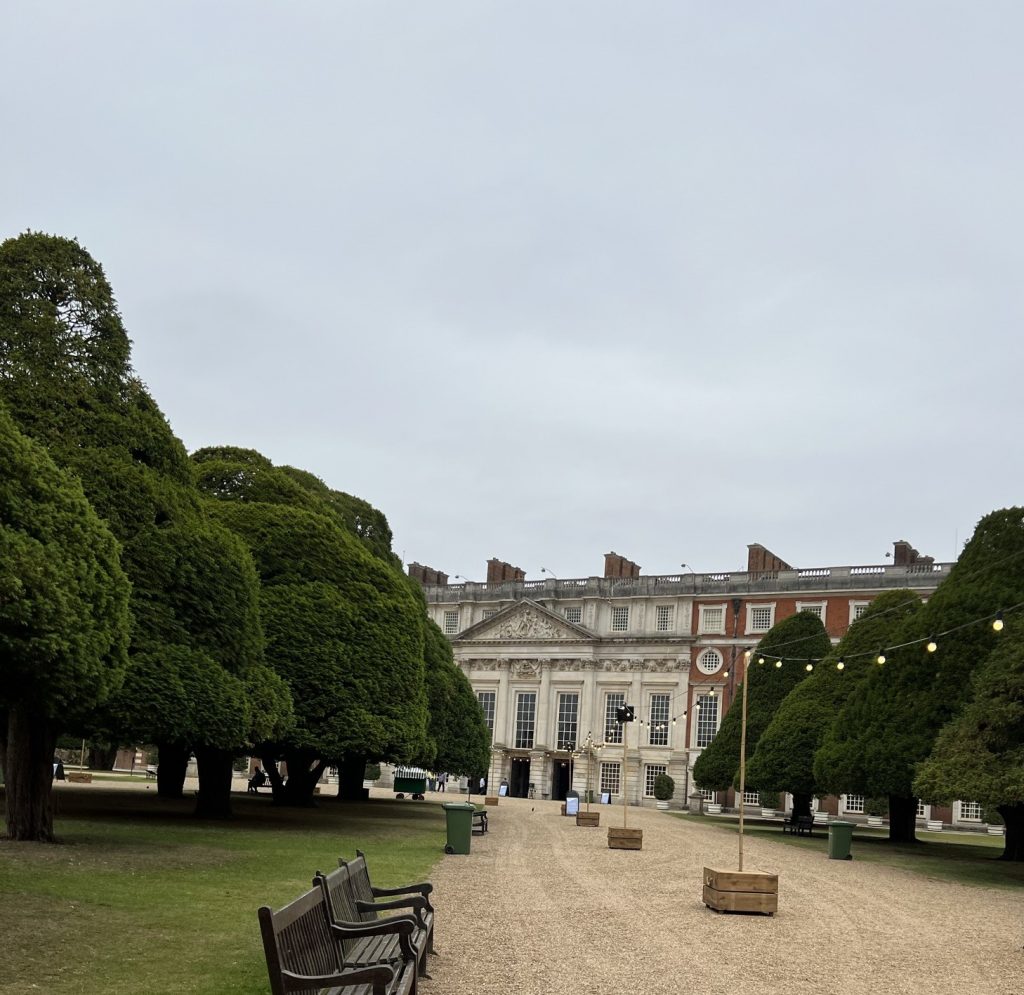
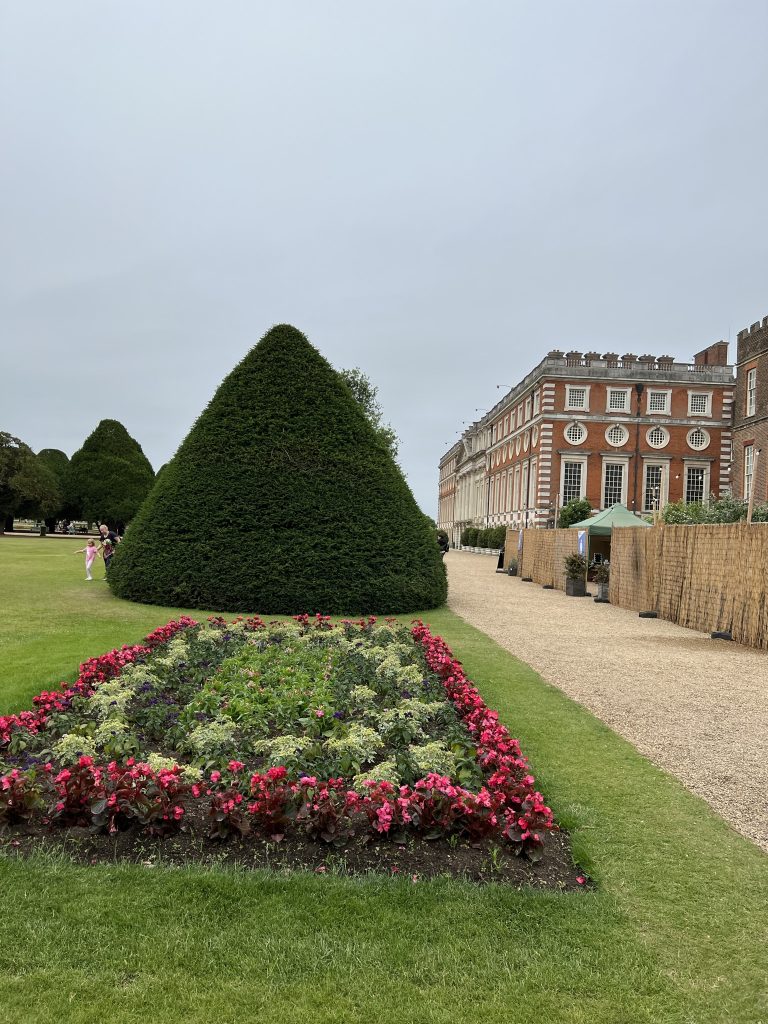
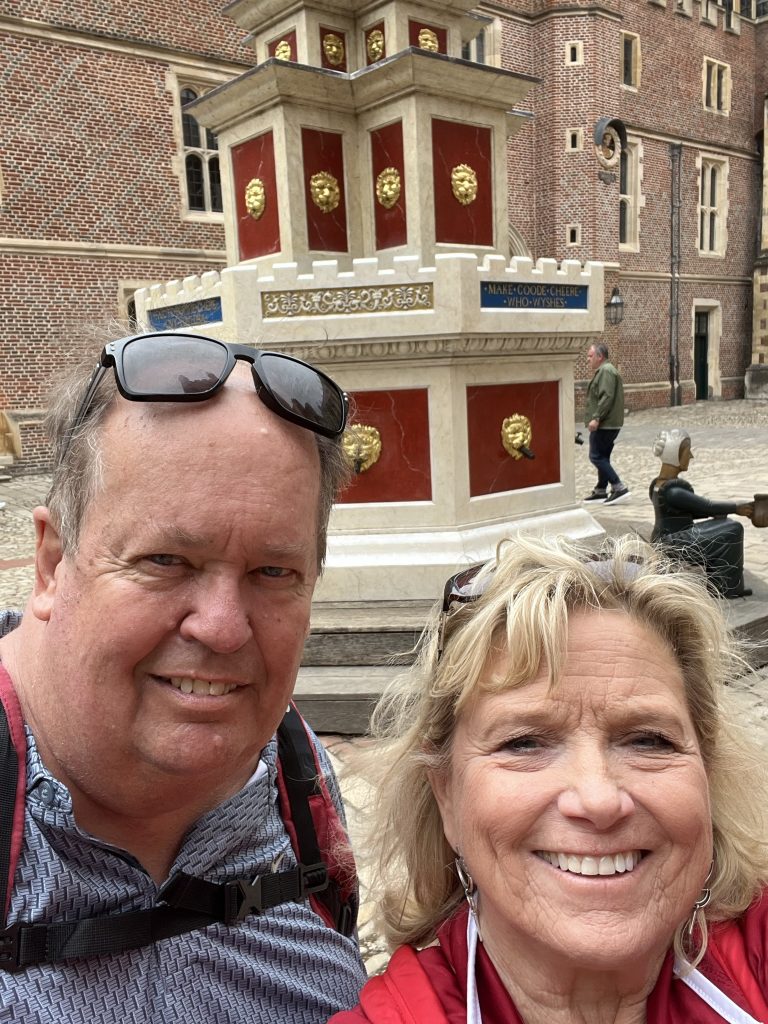
Hampton Court Exterior
Hampton Court Kitchens
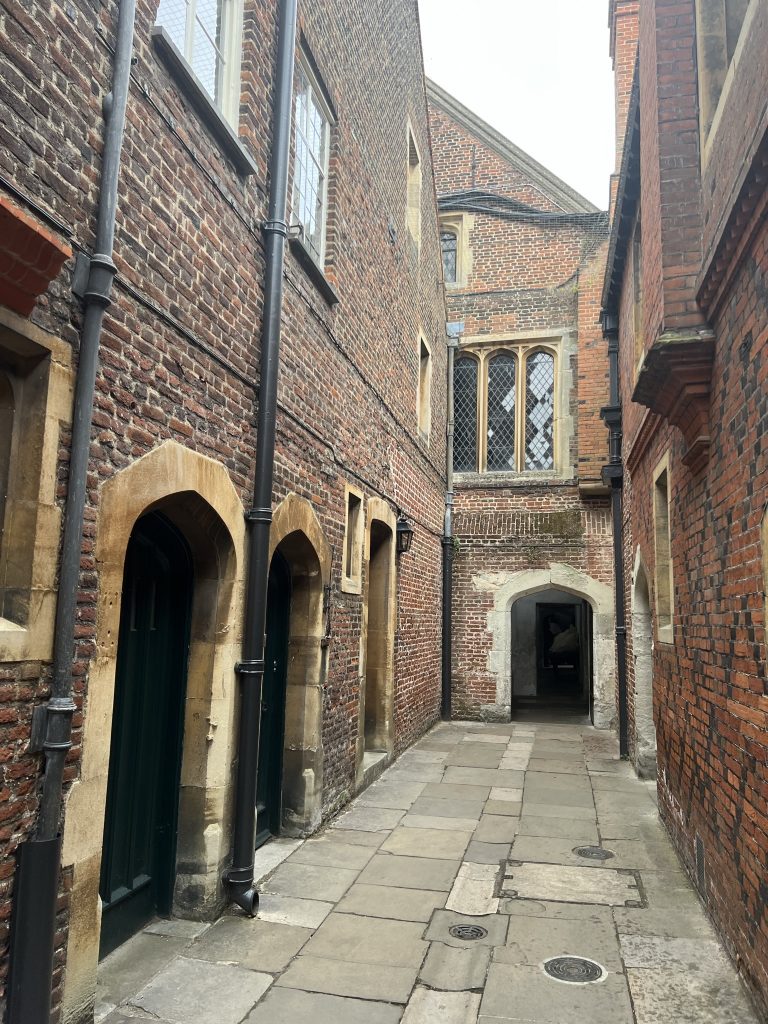
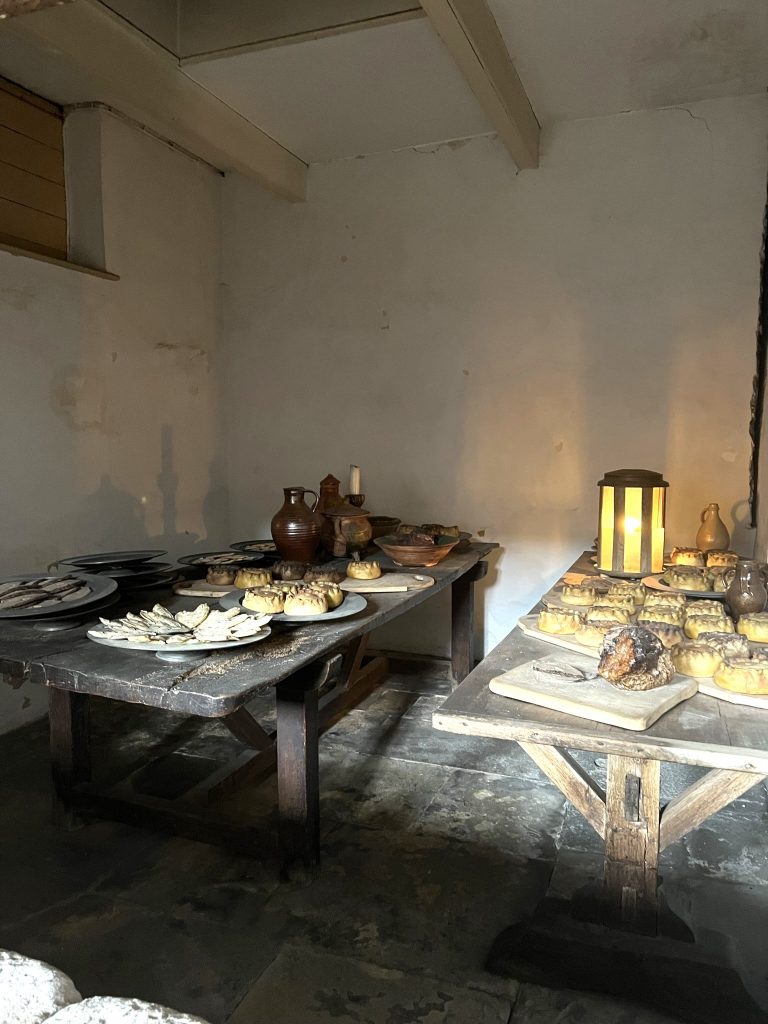

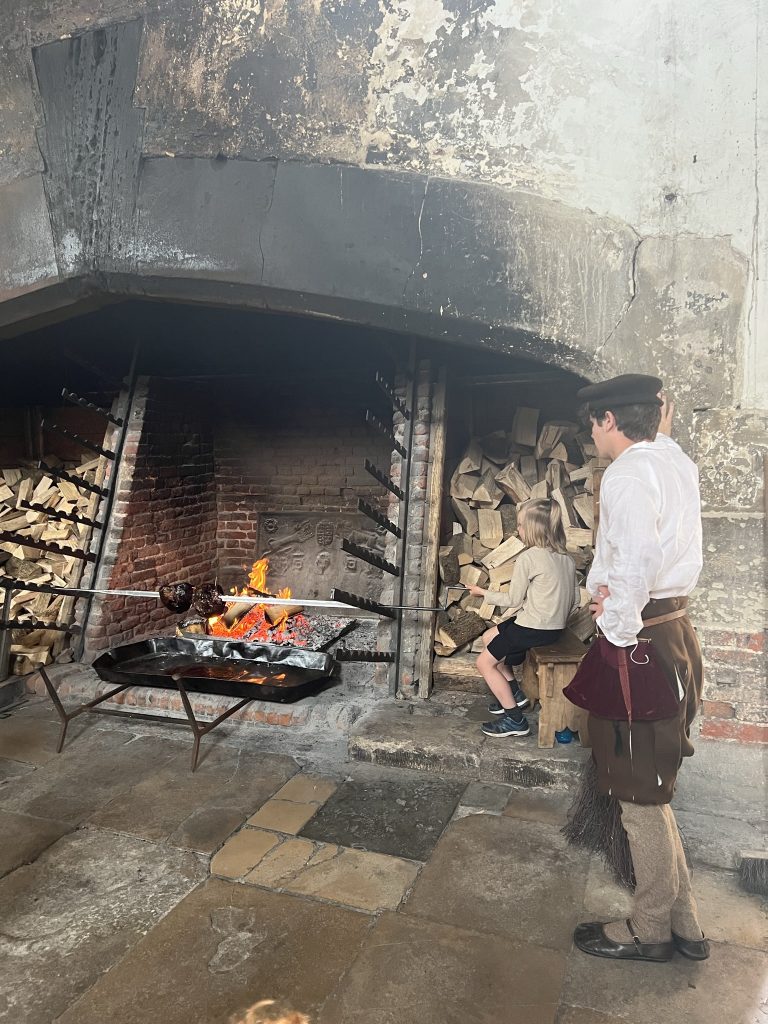
Notice the capacity to roast up to 64 different meats at the same time! This was a kitchen fit for a feast.
Exploring Hampton Court

The Great Hall
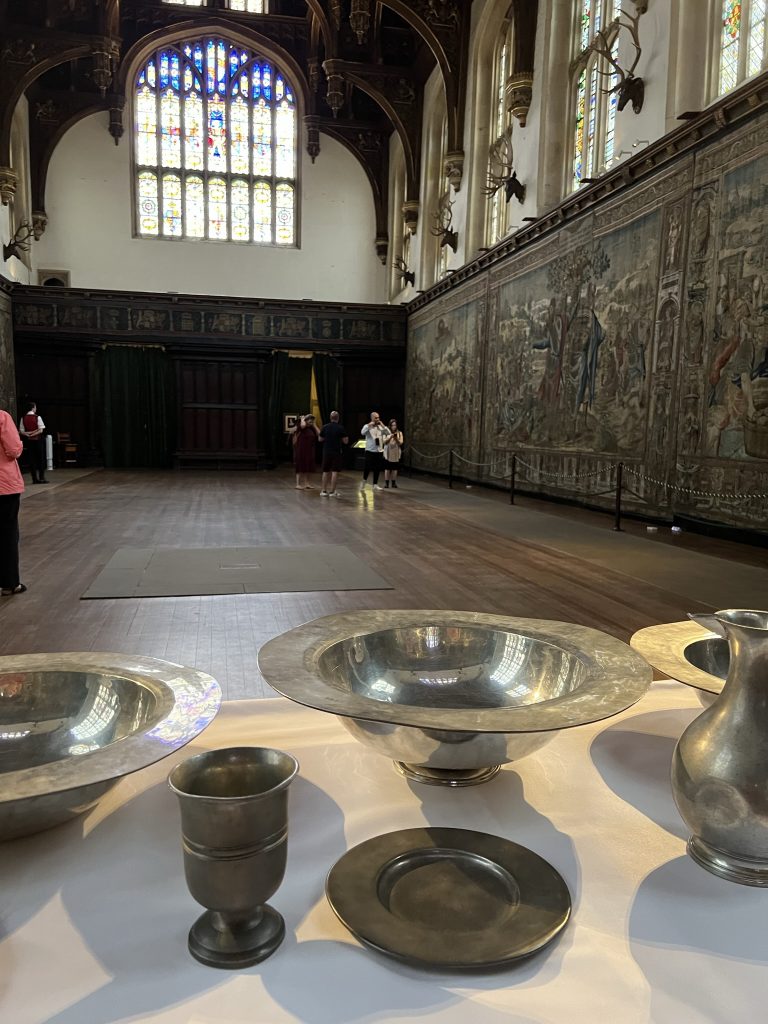
The great hall at Hampton Court is designed to impress. The hall is 104 feet long and 40 feet wide. The walls are covered in beautiful tapestries from the 1500s. The tapestries depict the story of Abraham in exquisite detail. Made with wool, silk, and gold thread they would’ve dazzled any visitor to the palace (and still do). The largest panels are 108 feet wide by 35 feet tall. In the early days, the tapestries were often transported to other castles or palaces as the court traveled. They were cut to fit different walls. Now they are protected by staying in the same place with the light, humidity, and temperature carefully controlled.
At the entrance to the great hall from within the castle, there is a raised dais where the king and queen sat. They allow visitors to sit at the table filled with silver platters, bowls, and chalices so you too can feel like a King or Queen.

Other Areas of the Palace
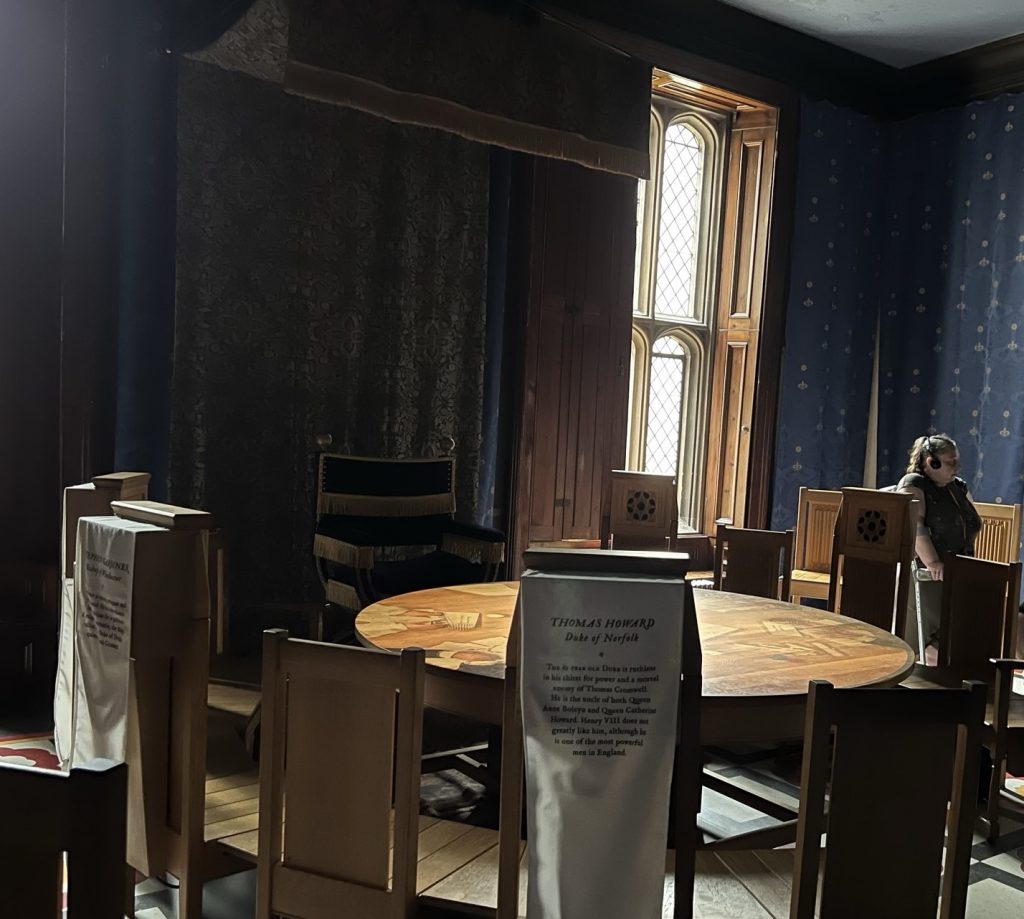
There was an interesting room that was arranged as the Kings Council room. The back of each chair was covered with the name and description of the “Councilor” to the king. The image of the man was displayed on the table and audio of the conversation was playing. It gave you a feeling for the happenings of the day.